If you think life is hard for an underground metal band in your country, it may be worth taking a closer look at what creating extreme music means in Iran. For BESHENITAR, a one-man black metal project from northern Iran, making music is not about career paths, scenes, or touring—it is an act of inner necessity carried out under constant social, political, and cultural pressure.
In this interview, Keyvan Khazayi speaks about the origins of BESHENITAR, his influences, everyday life outside of music, and the current reality in Iran—from censorship and repression to hope, resistance, and the future.
Tell us about your project BESHENITAR. Give us a short overview of how it started, the key releases so far, and the main lyrical themes you explore.
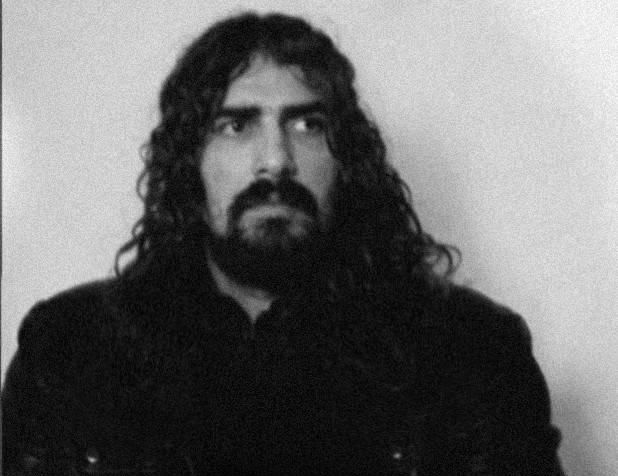
The one-man black metal project BESHENITAR was started unofficially in 2008 in my hometown of Nowshahr, Mazandaran, in northern Iran. At that time, I didn’t follow a specific genre; the music was mostly experimental and released as demos. However, in 2018 I decided to continue the project seriously and officially.
In the early years, my music leaned more toward depressive black metal, but over time my taste evolved. Today, my sound is more influenced by 1990s true black metal with an atmospheric approach. The themes of my work are deeply connected to my personal state of mind, ranging from misanthropy and isolation to anti-religion, politics, and society, eventually reaching cosmic and satanic concepts.
This path reflects an inner and philosophical journey rather than a simple genre choice. Given my limited facilities, all recording and production are carried out in my home studio.
How and when did you personally get into music? Which bands or artists pushed you toward extreme metal and shaped your sound?
I was born in November 1992. My entry into music wasn’t particularly early; until around 2008, when I was about 16 years old, I was mainly a listener and focused on practicing guitar before creating my own artistic work. In my opinion, this depends greatly on talent, interest, and perseverance.
Musically, I’ve been influenced by bands such as MÜTIILATION, MERRIMACK, DEATHSPELL OMEGA, TEMPLE OF BAAL from France, XASTHUR from the United States, SATANIC WARMASTER, SARGEIST, BEHEXEN from Finland, and WATAIN and MARDUK from Sweden, among others.
In Iran, I’ve also been influenced by close friends like Sam from NAJAND and Hamid from EMERNA.
That said, I have always tried not to imitate anyone and to maintain my own identity. Of course, having influences is inevitable for any artist. Regarding vocals, I have my own vocal style, although in black metal many vocal techniques naturally share similarities.
What do you do in everyday life outside of music? Where do you work when you’re not creating black metal?
No, music is not my main occupation. Currently, I work as a lobby attendant and security staff member in a residential tower, and I have been doing this job for nearly six years.
In my free time, I focus on music and studying. For me, music is more of an inner necessity and a means of survival rather than a profession. I always work for free, and I release my music freely. Anyone who wishes can support it financially, but there is absolutely no obligation to pay or purchase anything.
In my view, the essence of black metal should not be contaminated by financial matters.
I’m curious about the Iranian metal scene. Which styles are the most popular there right now? Are extreme metal bands allowed to deal with anti-religious themes—especially anti-Islamic ones—or is that crossing a hard line?
In Iran, even non-metal music faces severe restrictions, so expecting metal to be free is unrealistic. Concerts in general are banned, and only a limited number of bands are allowed to perform under Islamic regulations.
I’ve said this before: imagine music created under Islamic rules—doesn’t it sound absurd?
Before the recent events, did metal concerts actually take place in Iran? And a question people always ask: did many women attend metal gigs?
Music itself is a red line for the clergy and the laws of the Islamic Republic, and metal is completely suppressed and rejected. There are no metal concerts in Iran at all; they are considered haram (forbidden).
When women are forbidden from entering football stadiums alongside men, expecting freedom for metal concerts is simply impossible.
What is really going on in Iran at the moment—with the internet, protests, and everyday life? How different does the situation feel compared to last year? Is it scary to go out in the streets? And do you believe the claims in Western media that repression against protesters has stopped?
Even after around 18 days, the internet situation remains critical. This is not just my claim; NETBLOCKS has also reported it. For the first two weeks, the internet was almost completely shut down. Now it seems that some filtering barriers have been partially lifted, allowing limited access for professionals, but around 85% of the population still has no proper internet access.
Protests continue, and the Islamic Republic has shed the blood of thousands of men, women, and children. Tens of thousands have been killed or brutally suppressed. The people are angry and determined, standing with bare hands against bullets, batons, and military weapons.
On a personal level, how do you perceive what’s happening in the country? How do you see the near future? What worries you the most right now? What’s the atmosphere like in your city? Have you ever seriously thought about leaving Iran?
I remain hopeful. People in Iran have grown tired of religious rule and superstition. They no longer want a theocratic government that prioritizes religion over the well-being of its people.
I can say that more than 80% of the population rejects this Islamic regime. Many who did not participate in protests stayed home only out of fear for their lives.
Personally, I support the return of the Pahlavi monarchy.
As for leaving the country, I currently live with my mother and must take care of her, so it’s not possible for me right now. But in my heart, I truly wish to leave someday.
I wish this year to be successful for your project and calm for you personally. Would you like to send a message or a wish to your listeners and supporters?
I wish all the best to you, your media platform, and all supporters and listeners of independent music.
My new album, Flames of Eternal Blasphemy, is scheduled for release in 2026, or possibly 2027, with a lower probability. As with all my previous works, this album is a completely independent creation, and I am solely responsible for all aspects of it—from composition and recording to concept and execution.
Regarding my side project, the Persian black metal band AHRAMOG, there will be some exciting news coming soon.
Always remain independent in order to explore the world.